
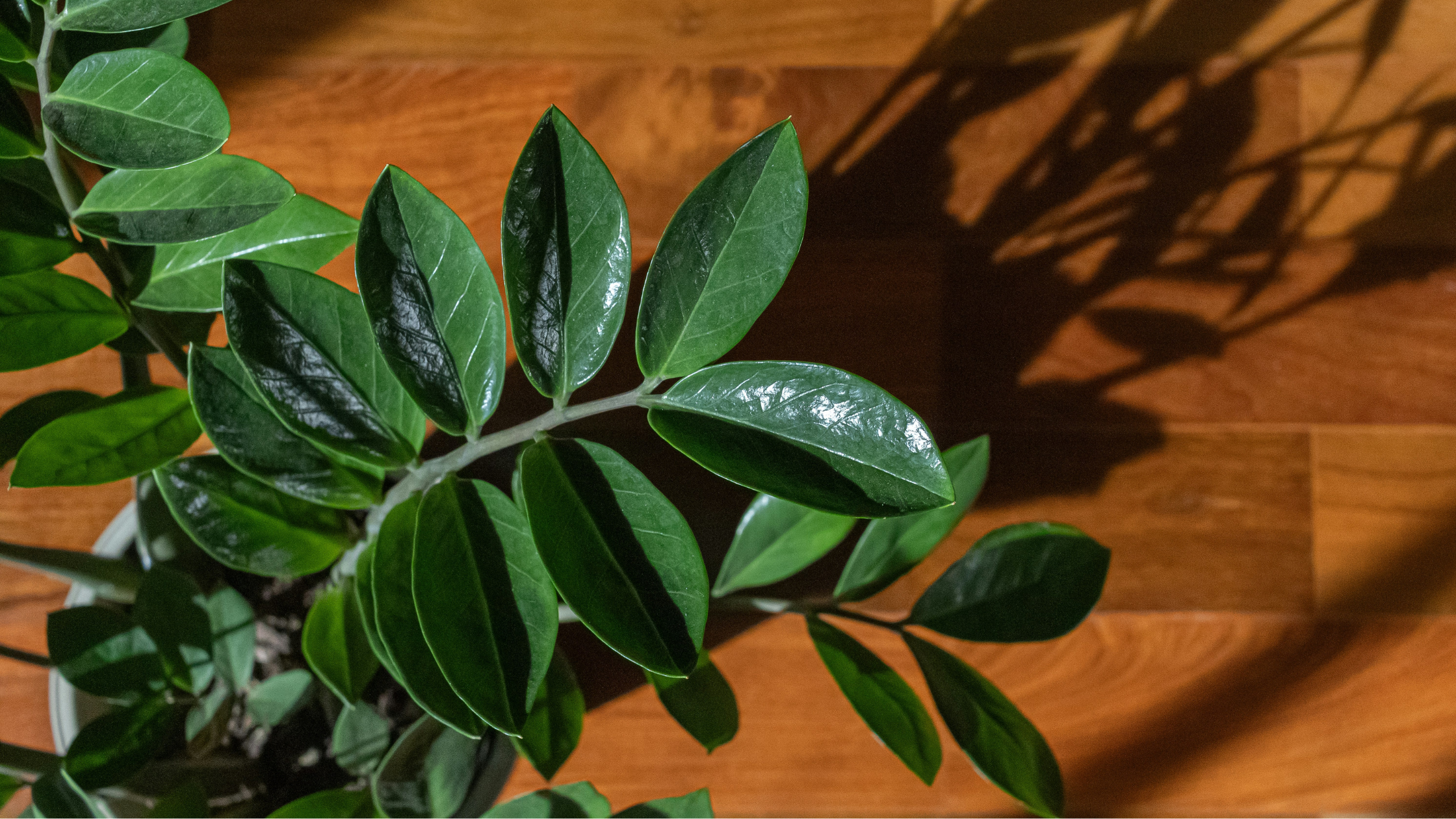
Everything you’ve ever wanted to know about Zamioculcas zamiifolia
The ZZ plant (Zamioculcas zamiifolia) is one of the most iconic, reliable and resilient houseplants of the modern indoor jungle. Glossy leaves, sculptural stems, slow growth, minimal needs — it’s the closest thing to “unkillable” that still looks elegant.
But behind its reputation as an ultra-tolerant plant lies a fascinating biology: underground water-storing organs, succulent leaflets, impressive drought adaptations, and a unique growth pattern that most people never notice.
At Planteka, we believe that understanding a plant’s story is the key to caring for it well. The ZZ plant teaches us patience, restraint, and the beauty of slow, steady growth. Let’s dive into everything you need to know about how it lives, what it needs, and how to help it look its best.
1. Origins: a plant engineered for survival
The ZZ plant comes from Eastern Africa, particularly Tanzania, Zanzibar and Kenya — landscapes where rain is scarce, seasons shift abruptly, and light levels are inconsistent. In those rocky grasslands and dry forests, a plant must manage long periods without water and then quickly store resources during rare moments of abundance.
To survive such conditions, the ZZ plant evolved huge underground rhizomes that act like water tanks. These swollen, potato-like structures store not only moisture but also nutrients, allowing the plant to withstand months of drought. Its stems are similarly thick and water-laden, and each leaflet is slightly succulent, covered in a waxy cuticle that reduces evaporation. All this results in a plant that is astonishingly efficient with its resources.
This background explains almost every aspect of its indoor behaviour: slow growth, strong tolerance to neglect, extreme sensitivity to overwatering, and the ability to thrive where many plants fail.
2. Botanical profile
Scientific name: Zamioculcas zamiifolia
Common names: ZZ plant, Zanzibar gem
Family: Araceae
Growth habit: Upright, clumping perennial
Natural lifespan: 10–15+ years (very long-lived indoors)
Toxicity: Mildly toxic if ingested (like most aroids)
Botanically, the ZZ is not a simple upright plant — it’s a collection of repeated structures. Each “stem” is actually a leaf, and each leaflet is attached to that central petiole. New leaves emerge from the rhizomes below the soil, gradually unfurling and hardening over several weeks.
The plant expands sideways, forming a clump of glossy pinnate leaves. Over years, these leaves fill the pot until the rhizomes press against the container walls, creating the familiar dense, architectural form that makes ZZ so recognisable.
There are also beautiful variations. The classic green ZZ is glossy and timeless, while the Raven ZZ has gained popularity for its dramatic colouring: lime-green new leaves that slowly turn deep purple-black. The compact Zenzi grows curled and dense, perfect for small spaces or shelves.
3. Light requirements
The ZZ plant is famous for its ability to tolerate low light, which is true — but there is a difference between “survive” and “thrive.” In nature, ZZ often grows beneath taller shrubs and trees, adapting to shade, but it still receives dappled or indirect sunlight.
Indoors, it can live in darker corners where few plants succeed, but its growth will be much slower, and stems may stretch or lean. In medium indirect light, however, it shows its best form: firm upright stems, tight internodes, and rich colouring. Bright indirect light is ideal, especially for the Raven variety, which maintains its dark pigmentation only when it receives enough illumination.
Direct sun is rarely beneficial. A few hours of gentle morning light may be tolerated, but strong afternoon sun can bleach or scorch the leaves. As a rule, place your ZZ where you can comfortably read without artificial light — that’s the level it prefers.
4. Watering: the most important part
Everything about the ZZ’s natural history leads to one conclusion: This plant hates being overwatered.
In the wild, the ZZ may receive only a few substantial rainfalls per year. Indoors, giving it water before the soil has fully dried is the fastest way to cause root and rhizome rot. For this species, dryness is comfort — moisture is danger.
Allow the soil to dry completely between waterings. In winter, this may take a month or more. In summer, perhaps two weeks. Rather than watering on a schedule, learn to feel the soil by inserting a finger down to the bottom of the pot (or use a chopstick). Dryness is the signal.
A thirsty ZZ is easy to identify: leaflets wrinkle slightly, stems feel soft, and the plant looks somewhat deflated. Watering at that stage will immediately restore firmness. Overwatered ZZs send stronger warnings — yellowing stems, mushiness at the base, and sometimes a sour smell. If this happens, remove all wet soil and repot immediately into a very airy mix.
When in doubt, it’s safer to postpone watering. Few houseplants forgive neglect as gracefully as a ZZ.
5. Humidity & temperature
If you live in a typical home, your air is already perfect for a ZZ. It does not require high humidity and tolerates the dry indoor climate of winter without complaint. Average room temperatures between 18 and 28 °C suit it well.
The only real danger is cold: prolonged exposure below 12 °C can stress the plant and lead to leaf drop. Keep it away from drafty windows or blasting heater vents, both of which can damage the foliage.
6. Soil: the foundation of a healthy ZZ
Because overwatering is the primary risk, the soil mix must drain quickly and allow plenty of air to reach the rhizomes. A dense, peat-heavy mix is a recipe for disaster.
A ZZ thrives in a light, chunky blend, ideally containing perlite or pumice, some pine bark for structure, and a modest amount of potting soil. The goal is not water retention but stability and aeration.
Clay pots are particularly beneficial; they allow the soil to dry more quickly and help prevent moisture from lingering around the rhizomes.
7. Repotting
The ZZ plant grows slowly, and its root system expands horizontally rather than deeply. Repotting every 2–3 years is more than enough. In fact, ZZ plants often grow better when slightly root-bound. Repot only when:
- rhizomes press hard against the pot wall,
- the soil no longer dries evenly, or
- watering has become unpredictable because the pot is too tight.
Choose a pot only slightly larger than the previous one — an oversized pot traps excess moisture and increases the risk of rot.
8. Fertilising
The ZZ’s slow metabolism means it does not need heavy feeding. A gentle dose of balanced liquid fertiliser once a month in spring and summer is enough. Over-fertilising can lead to brown tips, weak stems or salt build-up in the soil. In autumn and winter, you can stop feeding entirely.
9. Pruning and shaping
Pruning a ZZ is simple. If a stem turns yellow, begins to soften or looks tired, remove it cleanly at the base. This encourages new growth and prevents the plant from expending energy on declining tissue. You can also trim stems to control height, though remember that new stems emerge from the rhizome, not from the cut point.
10. Propagation
Propagation is possible, but it is exceptionally slow — a direct reflection of the plant’s natural pace.
Dividing the rhizomes during repotting is the fastest method, producing an immediate, smaller plant. Stem cuttings and leaflet cuttings also work, but root formation can take months, and visible growth even longer. If you choose these methods, treat them as meditative projects rather than quick reproductions.
11. Common issues and how to interpret them
Most problems in ZZ plants stem from improper watering or incorrect placement. Yellowing stems generally indicate excess water, while wrinkling and drooping signal underwatering. Pale, elongated growth points to insufficient light. Brown tips can appear in very dry homes or when underwatering is prolonged.
Occasionally, you may find sticky droplets on stems or leaf bases. These are usually extrafloral nectaries, a natural secretion, not a pest issue. Wipe them gently if they bother you, but they are harmless.
12. Styling
The ZZ plant is effortlessly stylish, fitting into almost any interior. Its clean, upright lines pair beautifully with minimalist décor and modern spaces, but it also provides a grounding element in more eclectic rooms. Place it where its glossy leaves can catch soft light — on a low bench, in a ceramic pot beside a sofa, or on a bedroom dresser.
The Raven variety adds dramatic contrast and works wonderfully in monochrome spaces. Because the ZZ grows slowly and retains its shape for years, it is ideal as a stable design element.
Dust the leaves regularly to maintain their reflective sheen, as clean foliage maximises the plant’s ability to photosynthesise in low light.
A final note from Planteka
The ZZ plant is more than a low-maintenance companion — it is a quiet teacher. It shows us that not all care is active; sometimes the best support is restraint. It rewards patience and observation, and it forgives more than most plants ever will.
If you want to deepen your understanding of plant biology and master easy, confident care, join our workshops in Barcelona, Madrid or Valencia, or explore our online gardening courses. We’ll help you build a greener home, one plant at a time.

 Planteka Community Blog