
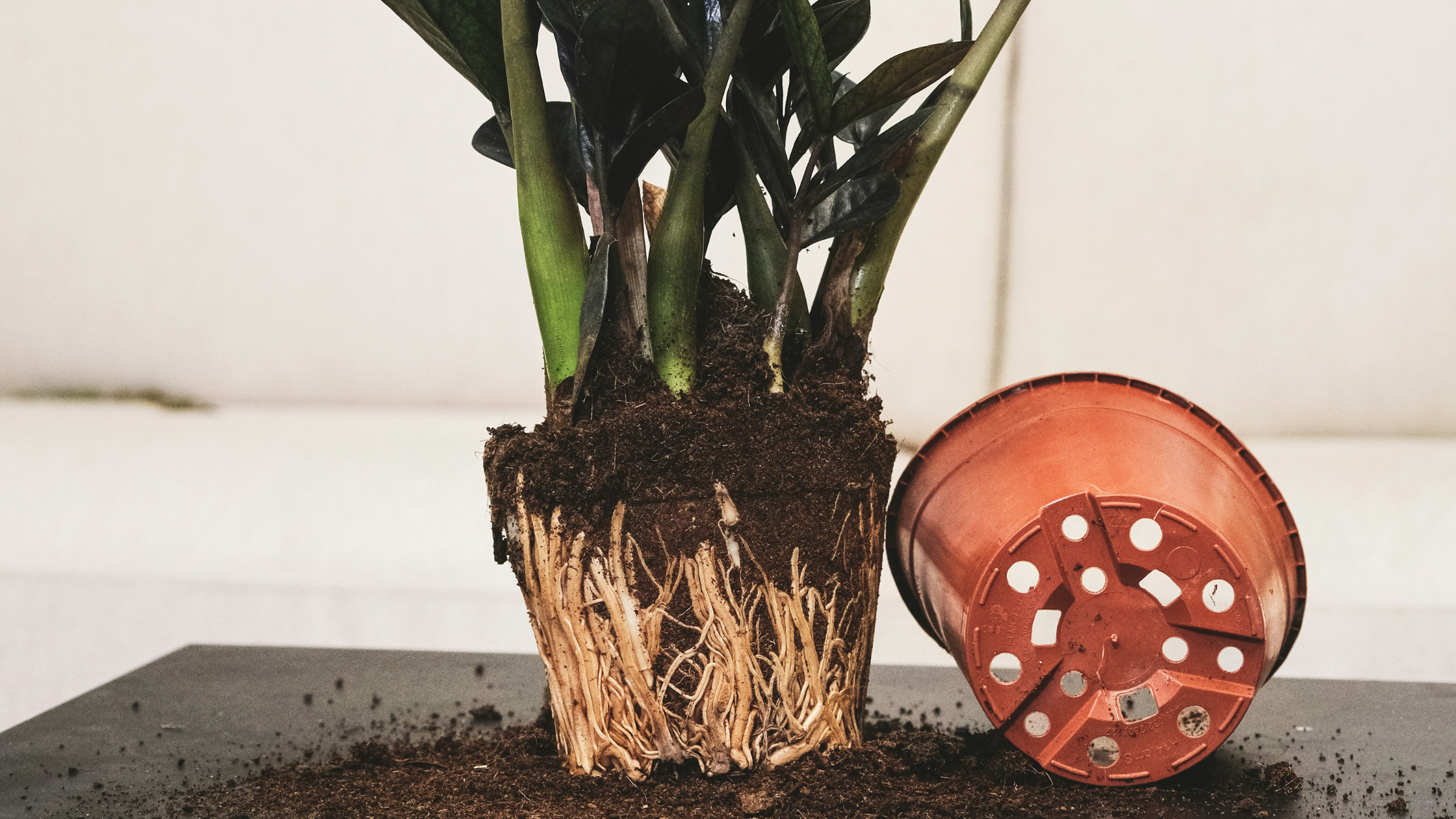
Repotting is one of the most important but often misunderstood aspects of plant care. Many plant lovers—especially beginners—wonder: how do I know if my plant needs a new pot? Some wait too long, leaving roots cramped and stressed, while others repot too frequently, disturbing the plant unnecessarily. Understanding when and how to repot is key to keeping your green companions healthy and thriving.
At Planteka, we help plant lovers take better care of their plants—whether you’re just starting out or managing a full garden. Through workshops, services, practical guides, and our personalized Plant Doctor consultations, we guide you step by step so you can grow with more confidence and joy.
Why repotting matters
Unlike in nature, where roots can expand into the soil freely, potted plants live in a limited environment. Over time, the available space, nutrients, and structure of the soil change:
- Roots fill the pot and begin circling or pushing through drainage holes.
- Soil becomes compacted, reducing air circulation and water absorption.
- Nutrients are depleted, especially if the plant hasn’t been fertilized regularly.
Repotting refreshes the plant’s environment, gives the roots more room, and supplies new, nutrient-rich soil.
Signs your plant needs repotting
Not every plant follows the same rhythm, but these are reliable indicators:
Top-heavy plants: If your plant tips over easily, it may need a larger base for stability.
Roots escaping: You see roots poking out of the bottom holes or emerging on the surface.
Growth slows down: Even with proper care, the plant isn’t producing new leaves or shoots.
Water drains too quickly: Compact or root-bound soil doesn’t retain moisture properly.
Leaves yellowing or wilting: Sometimes mistaken for watering issues, this can also signal root stress.
Best time of year to repot
Spring and early summer are ideal, as plants are actively growing and can recover quickly.
Late summer to early autumn can also work in Mediterranean climates, provided it’s not too hot.
Avoid winter, when most plants slow their growth, and mid-summer heatwaves, when stress is already high.
Special cases
- Houseplants: Generally need repotting every 1–2 years. Slow growers (like ZZ plants or Sansevieria) can go 3–4 years.
- Outdoor plants in pots: Mediterranean sun and wind can dry soil faster, so check roots yearly, especially for fast-growing species like bougainvillea or geraniums.
- Newly bought plants: It’s tempting to repot immediately, but give them 2–3 weeks to adapt unless the soil is clearly poor or waterlogged.
- Large plants: Instead of moving them to a bigger pot, you can refresh the top layer of soil and prune roots lightly.
How to repot correctly
Replant with fresh soil: Place the plant at the same depth as before. Fill around the roots gently, then water lightly.
Choose the right pot size: Only 2–4 cm wider than the current one. Too large a pot can hold excess water and cause root rot.
Select suitable soil: Use a mix that matches the plant’s needs—succulent soil for cacti, rich organic mix for tropicals, etc.
Remove carefully: Support the base, tap the pot, and ease out the root ball. Never pull by the stem.
Inspect roots: Trim dead, mushy, or spiraled roots. Healthy roots should look firm and white.
Aftercare: helping your plant adjust
Repotting is stressful for plants, so aftercare is crucial:
- Keep it shaded for a few days if it’s usually in direct sun.
- Water moderately—don’t flood the fresh soil.
- Hold off on fertilizer for 3–4 weeks; the new soil already contains nutrients.
- Expect some adjustment: It’s normal for plants to pause growth or drop a few leaves while they settle.
Common mistakes to avoid
❌ Choosing a pot that’s far too big.
❌ Repotting too often—sometimes the plant just needs fresh soil, not a bigger pot.
❌ Repotting during extreme heat or in the middle of winter dormancy.
❌ Forgetting drainage holes.
Final thoughts
Repotting is less about sticking to a calendar and more about observing your plant’s signals. Learn to read the roots, the soil, and the growth pattern—your plants will tell you when it’s time.
And if you’re unsure, don’t worry. At Planteka, our Plant Doctors can help you decide whether your plant really needs repotting, what soil mix to use, and how to do it without stress.
💬 Do you have a plant that seems ready for a new pot? Share your story in the comments—we’d love to hear it!

 Planteka Community Blog
3 Comments