
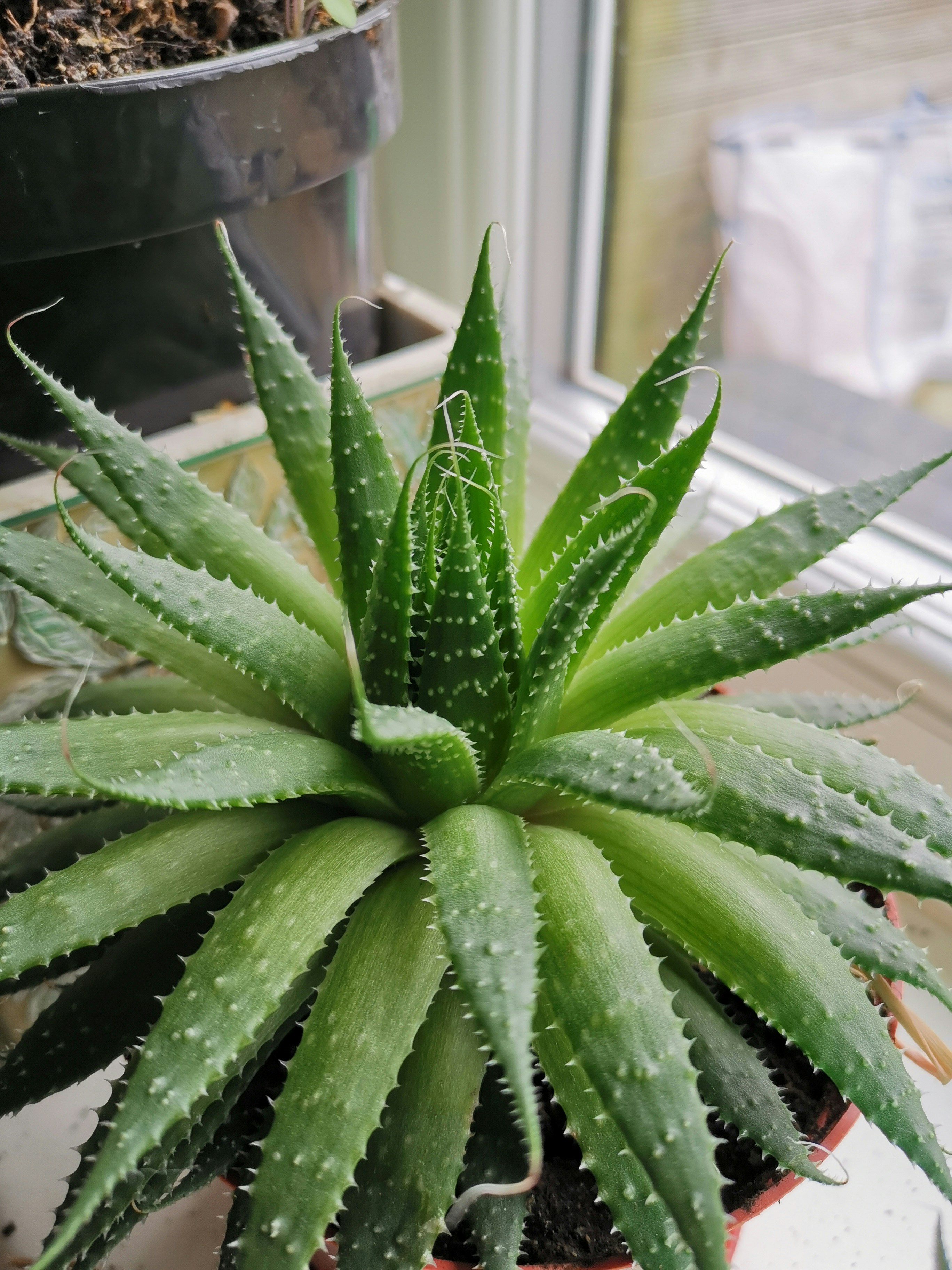
With July’s heat in full swing, we turn to one of the most iconic and useful succulents: Aloe Vera. Famous for its soothing gel and almost unkillable nature, Aloe Vera (botanical name: Aloe barbadensis miller) is a summertime superstar—both for your skin and your plant shelf. Check our June article on Lavender if you haven’t seen it yet here.
At Planteka, we strive to reintegrate plants into our everyday lives and grow appreciation for the beauty and service of the nature around us. We offer informational content like this, as well as workshops and personalized Plant Doctor Consultations to help you take better care of your plants!
Origin and history of Aloe Vera
Native to the Arabian Peninsula, Aloe Vera has naturalized in many arid and subtropical regions, from the Mediterranean to India to North Africa. It’s been cultivated for over 6,000 years for its medicinal, cosmetic, and ornamental value. In Ancient Egypt, it was called the “plant of immortality.”
Aloe Vera has long, thick leaves with serrated edges, and contains a thick, clear gel in the centre of its leaves. For centuries, people have used the gel of an Aloe Vera plant to soothe and moisturize their skin and hair, and some consider the gel a natural anti-inflammatory medicine that can be used to treat digestive issues. With its cooling and rehydrating properties, many people use Aloe Vera to soothe sunburns, as it quickly reduces redness, inflammation, and pain. Aloe Vera can also be used to hydrate dry skin and soothe other skin conditions like eczema, psoriasis, and acne. Aloe Vera gel can even be used as a natural conditioner to moisturize dry and damaged hair, and can be paired with castor oil to create a hair growth serum.
Is Aloe Vera easy to care for?
With all these practical qualities, you must be thinking, ‘This plant sounds too good to be true, I could never maintain it.’ Wrong! You absolutely can grow and take care of an Aloe Vera plant, even as a beginner planter. Aloe Vera is one of the easiest plants to grow, as it does not need regular watering and is not particularly picky about the amount of sunshine it receives. In addition, Aloe Vera plants are very communicative. If an Aloe Vera plant is being overwatered or needs more sunlight, it will tell you! The green leaves of an Aloe Vera quickly change colors to yellow or brown to express its distress. These signs are very easy for beginning plant parents to follow.
How to care for Aloe Vera
Light
- Bright, indirect light is ideal. Too much direct sun can cause leaf sunburn.
- South or west-facing windows are perfect indoors.
- Outdoors, acclimate slowly to full sun.
Temperature & Humidity
- Thrives between 18–30°C (65–86°F).
- Bring it inside if temps drop below 10°C (50°F).
- No misting needed—Aloe likes it dry!
Soil & Pot
- Use well-draining soil: cactus or succulent mix works great.
- Terracotta pots are ideal—they let roots breathe and prevent water buildup.
- Repot every 2–3 years if it outgrows its pot.
Watering
- In summer: every 2–3 weeks, once the soil is completely dry
- In winter: every 4–6 weeks
- Water deeply, but always let excess drain. Never let Aloe sit in soggy soil!
How to propagate Aloe Vera
Aloe produces “pups”—baby plants growing around its base.
To propagate:
- Wait until pups are at least 5–7 cm tall
- Gently separate them with clean hands or a knife
- Let them dry for 1–2 days before planting in dry soil
- Wait a few more days before watering to prevent rot
How to harvest Aloe Vera gel
- Use a mature leaf from the outer layer
- Cut close to the base with a clean knife
- Let the yellow sap drain (don’t use it)
- Rinse the leaf and slice it open. Scoop out the gel
- Use fresh or refrigerate in an airtight container for up to 1 week
Uses of Aloe Vera gel
- Soothes sunburns: cools, hydrates, and reduces inflammation
- Moisturizes dry skin without feeling greasy
- Speeds up healing: minor cuts, scrapes, and burns
- Tames itchy scalp & boosts hair hydration
Note: Try doing a patch test before using the gel, especially if you have sensitive skin. Also remember that Aloe Vera is toxic to cats and dogs if ingested, so keep it out of reach of any pets.
Book a Plant Doctor consultation to troubleshoot watering, light, or soil issues—or bring your questions to our Gardening for Beginners course in Barcelona, Madrid, Valencia, or online.

💬 What do you use Aloe Vera for? Have you tried propagating pups yet? Tell us in the comments!

 Planteka Community Blog
2 Comments