
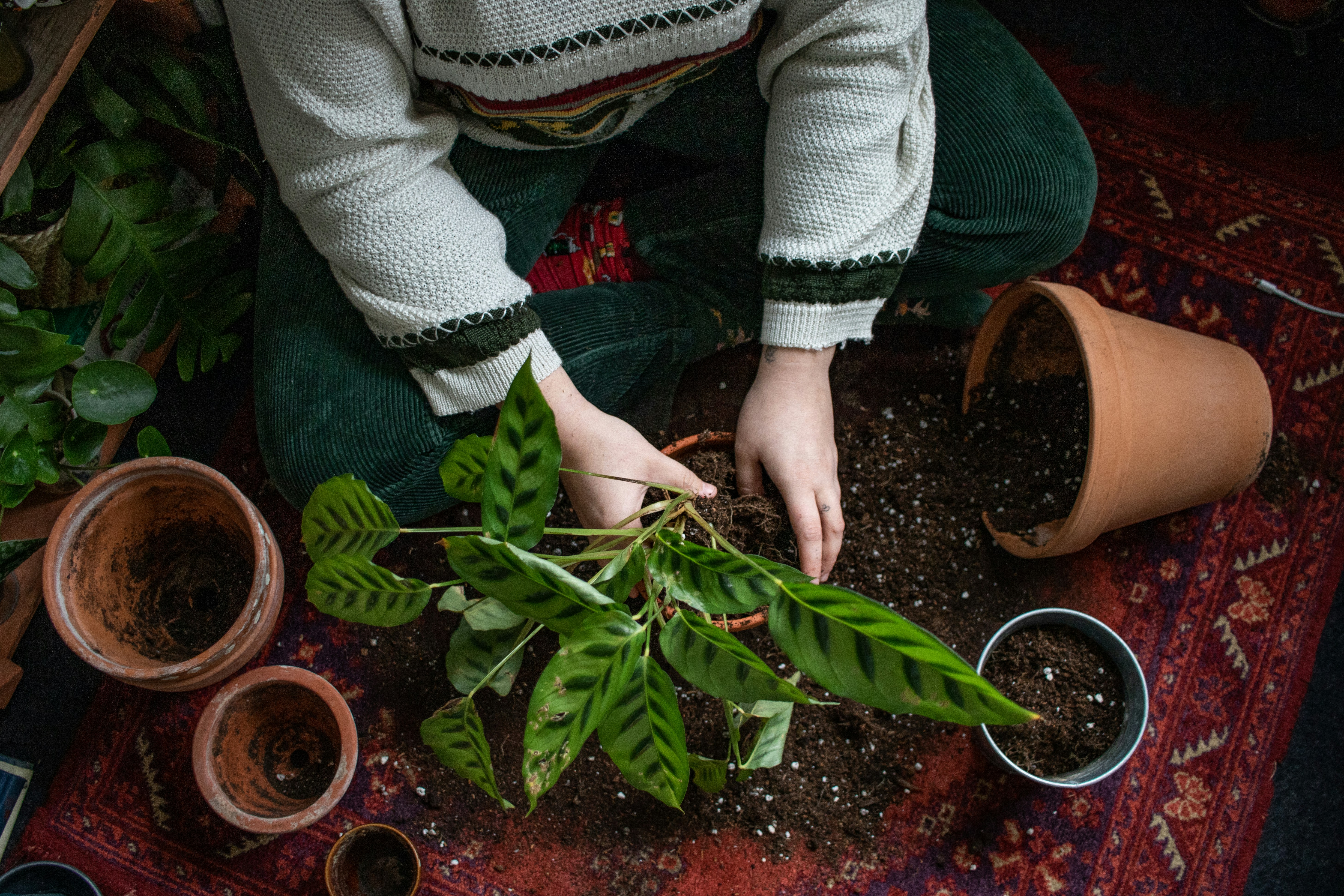
Buying a new plant is exciting, but knowing when to transplant it is key to ensuring its health and growth. Here’s a guide on when and how to do it correctly.
1. Assess the plant’s condition
Initial inspection:
When you get a new plant, the first step is to evaluate its condition. Some signs that indicate it needs an immediate transplant include:
- Health check: Look for signs of pests or diseases. If you notice any infestation or root rot, it’s best to transplant the plant to remove the affected soil and treat the roots.
- Rootbound or outgrown roots: If you see roots growing out of the drainage holes or the plant looks cramped in its pot, it’s time for a change.
- Poor soil condition: Old or low-quality soil may lack essential nutrients and affect water retention. If the soil looks compacted, dry, or has an unpleasant odour, consider an immediate transplant.
If the plant appears healthy, with good-quality soil and enough space for its roots, you can wait 2 to 4 weeks before transplanting. This period allows the plant to acclimate to its new environment without the added stress of an immediate transplant.
2. Best season to transplant
Spring and summer are the most suitable seasons for transplanting because most plants are in their active growth phase. Roots recover faster, and the plant adapts better to its new environment.
In regions with moderate climates, autumn can also be a good time for transplanting, as the cooler temperatures are less stressful for the plant.
Many plants enter dormancy or slow growth during winter. Avoid transplanting during this time, as the roots are less active, and the risk of shock is higher.
3. Preparing for transplantation
Step-by-step guide:
- Choose the right pot: For detailed guidance, check out our recent article. Avoid pots that are too large as they can retain excess moisture, increasing the risk of root rot. Opt for a size proportional to the plant’s growth.
- Prepare the pot: Place a layer of drainage material at the bottom (such as small stones or gravel).
- Lightly hydrate the plant: Before transplanting, water the plant to make it easier to remove the root ball without damaging the roots.
- Careful removal: Hold the plant at its base, gently turn the pot upside down, and remove the plant. If it’s tightly packed, press the sides of the pot to loosen the root ball.
- Clean the roots: Gently remove old soil clinging to the roots. If you find damaged or rotten roots, trim them with clean disinfected tools.
- Position the plant: Place the plant in the new pot, ensuring it sits at the same depth as in the previous pot.
- Fill with fresh soil: Add fresh soil around the plant, pressing lightly to eliminate air pockets.
- Initial watering: Lightly water to settle the soil but avoid soaking it.
4. Post-transplant care
After transplanting, reduce the watering frequency to prevent newly moved roots from rotting. Place the plant in a spot with bright, indirect light and protect it from drafts as it adjusts. If you have a greenhouse, that’s even better. During the first few weeks, watch for any signs of stress, such as yellowing leaves or leaf drop. This is normal until the plant acclimates, but if it persists, adjust your care routine.
Transplanting a new plant is a crucial step in ensuring its long-term health. By carefully observing its initial condition, choosing the right time, and following the correct methods, you can create an optimal environment for your plant to thrive. Always consider the specific needs of each species to guarantee its success.
Have questions about transplanting your plant?
No worries! At Planteka, our Plant Doctors are always ready to help. If you need personalized advice or have questions about plant care, don’t hesitate to consult our experts. We’re here to make sure your garden always looks green and healthy 🙂

 Planteka Community Blog