
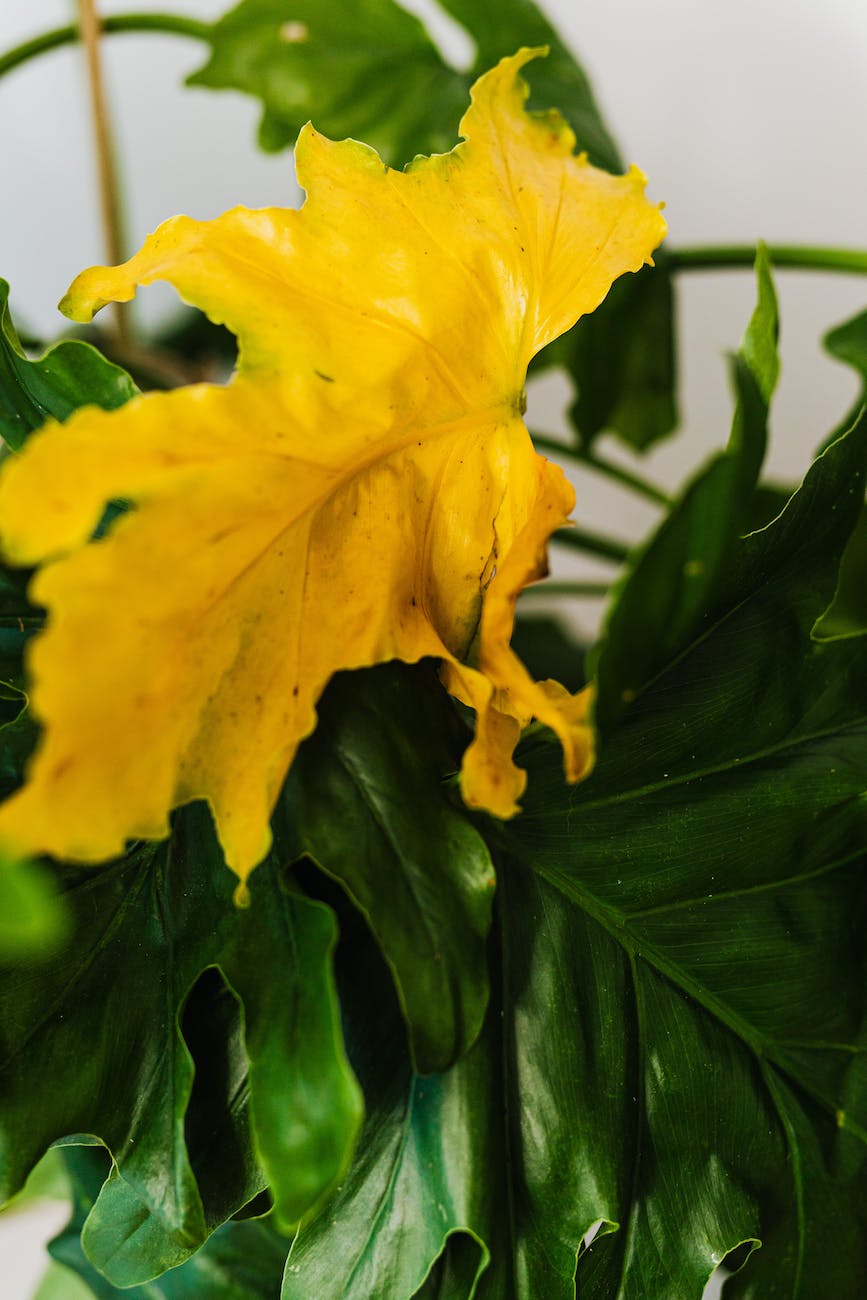
Your plants having yellowing leaves; but you don’t know what’s causing them? We found six possible reasons that could lead to yellowing leaves for your plants: Natural aging, change of seasons, pests, overwatering, under-watering or nutrient deficiency. The reasons can be one of them or a combination of them. I
It’s important to go through a process of elimination to really understand what the reason is for the yellowing leaves.
- Natural Aging:
- Signs: Yellowing typically starts with the older leaves at the bottom of the plant.
- Observations: Look for a uniform yellowing pattern in older leaves, especially those closer to the base.
- Additional Clues: Yellowing is accompanied by the normal process of leaves becoming dry and eventually falling off.
- Change of Seasons:
- Signs: Yellowing may occur during the transition between seasons.
- Observations: Consider the time of year and whether the plant is exhibiting other signs of seasonal adaptation.
- Additional Clues: New growth may appear healthy, and the yellowing is temporary.
- Pests:
- Signs: Irregular yellowing patterns, spots, or stippling on leaves. These leaves drop off soon.
- Observations: Inspect the plant for pests, such as spider mites, aphids, or scale insects.
- Additional Clues: Presence of insects, webs, or sticky honeydew on leaves.
- Overwatering:
- Signs: Yellowing typically starts at the base of the plant, and leaves may become soft and mushy. These leaves drop off soon.
- Observations: Check the soil for excessive moisture and signs of root rot.
- Additional Clues: Wilting despite wet soil, mold growth, or a foul odor from the soil.
- Underwatering:
- Signs: Yellowing usually starts at the tips or edges of the leaves. Leaves drop off soon.
- Observations: Check the soil for dryness and signs of dehydration.
- Additional Clues: Brittle, crispy leaves and overall wilting despite dry soil.
- Lack of Nutrients:
- Signs: Yellowing may be uniform or specific to certain parts of the plant, depending on the nutrient deficiency. Leaves don’t drop off immediately.
- Observations: Consider the overall health of the plant and any recent changes in fertilization practices.
- Additional Clues: Look for other symptoms associated with specific nutrient deficiencies (e.g., leaf discoloration, stunted growth).
- Lack of Light:
- Signs: Lower leaves turn yellow.
- Observations: Consider the location of the plant, with respect to the light source.
- Additional Clues: Look for leaves that are farthest away from light and see if they have yellowed in comparison to other leaves.
Regularly inspecting your plants, maintaining a consistent watering schedule, and providing proper care can help prevent and address these problems. If you’re unsure about the cause of the yellowing, consider seeking advice from our local plant experts or sharing a sample at our personalised gardening course for a more accurate diagnosis.

 Planteka Community Blog